Grounding techniques for anxiety
Imagine you're in a meeting, and
suddenly, your heart races, your palms sweat, and your thoughts spiral. You're
not alone. Anxiety disorders affect approximately 19.1% of U.S. adults
annually, with women experiencing higher rates than men. The good news?
Grounding techniques offer practical tools to anchor you in the present moment,
helping to alleviate anxiety's grip.(National
Institute of Mental Health, Johns Hopkins
University Human Resources)
Understanding grounding
techniques
Grounding techniques are
strategies that help you detach from emotional pain and connect back to the
present moment. They can be physical, mental, or soothing, and are particularly
effective during episodes of anxiety, panic, or trauma-related distress .(Healthline)
Physical grounding techniques
1. Deep breathing
Engage in diaphragmatic breathing
by inhaling deeply through your nose, allowing your abdomen to expand, and
exhaling slowly through pursed lips. This activates the parasympathetic nervous
system, promoting relaxation .(SELF)
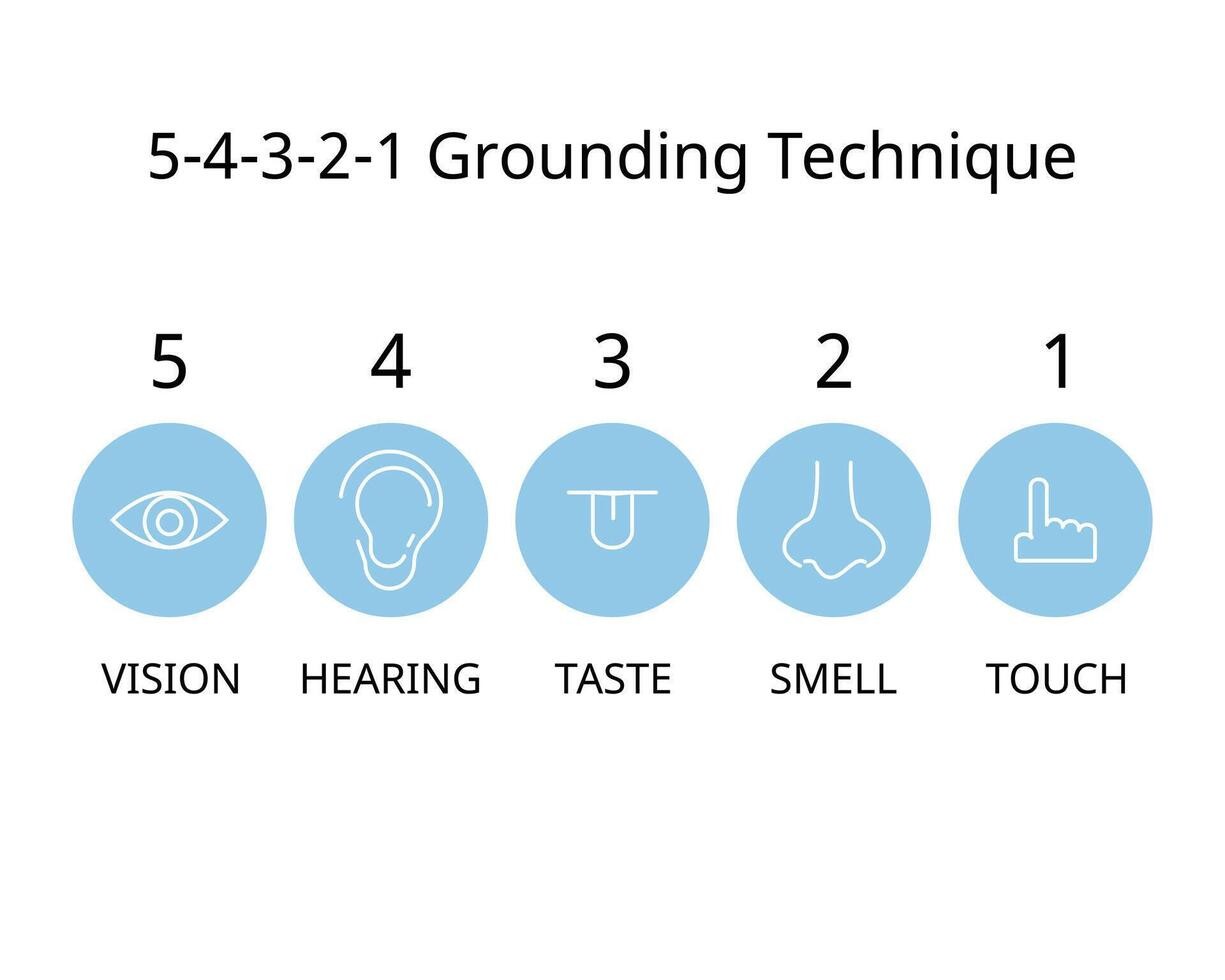
2. 5-4-3-2-1 technique
Identify:
- 5 things you can see(Verywell Mind)
- 4 things you can feel
- 3 things you can hear
- 2 things you can smell
- 1 thing you can taste
This sensory exercise helps divert your focus from anxious thoughts to your immediate environment .
3. Physical movement
Engage in activities like
stretching, walking, or jumping jacks. Physical movement can release tension
and redirect your focus .(Healthline)
Mental grounding techniques
1. Visualization
Close your eyes and imagine a
peaceful place. Engage all your senses to make the scene as vivid as possible.
2. Mental exercises
Recite the alphabet backward,
count down from 100 by sevens, or name all the states. These tasks require
concentration, helping to interrupt anxious thoughts.(Healthline,
Johns Hopkins
University Human Resources)
Soothing grounding techniques
1. Self-compassion
Speak to yourself kindly. Remind
yourself that it's okay to feel anxious and that this feeling will pass.(Healthline)
2. Savoring
Slowly eat a piece of chocolate
or sip tea, focusing on the taste, texture, and aroma. This mindfulness
practice can ground you in the present.(Healthline,
University of Rochester Medical
Center)
Incorporating grounding into
daily life
Consistency is key. Integrate
grounding techniques into your daily routine to build resilience against
anxiety. Over time, these practices can become second nature, providing a
reliable toolkit for managing stress.
In short, anxiety may be a common experience, but it doesn't have to control your life and with employing grounding techniques, you can regain control, find calm, and navigate challenges with greater ease. Remember, seeking support from mental health professionals can further enhance your coping strategies.